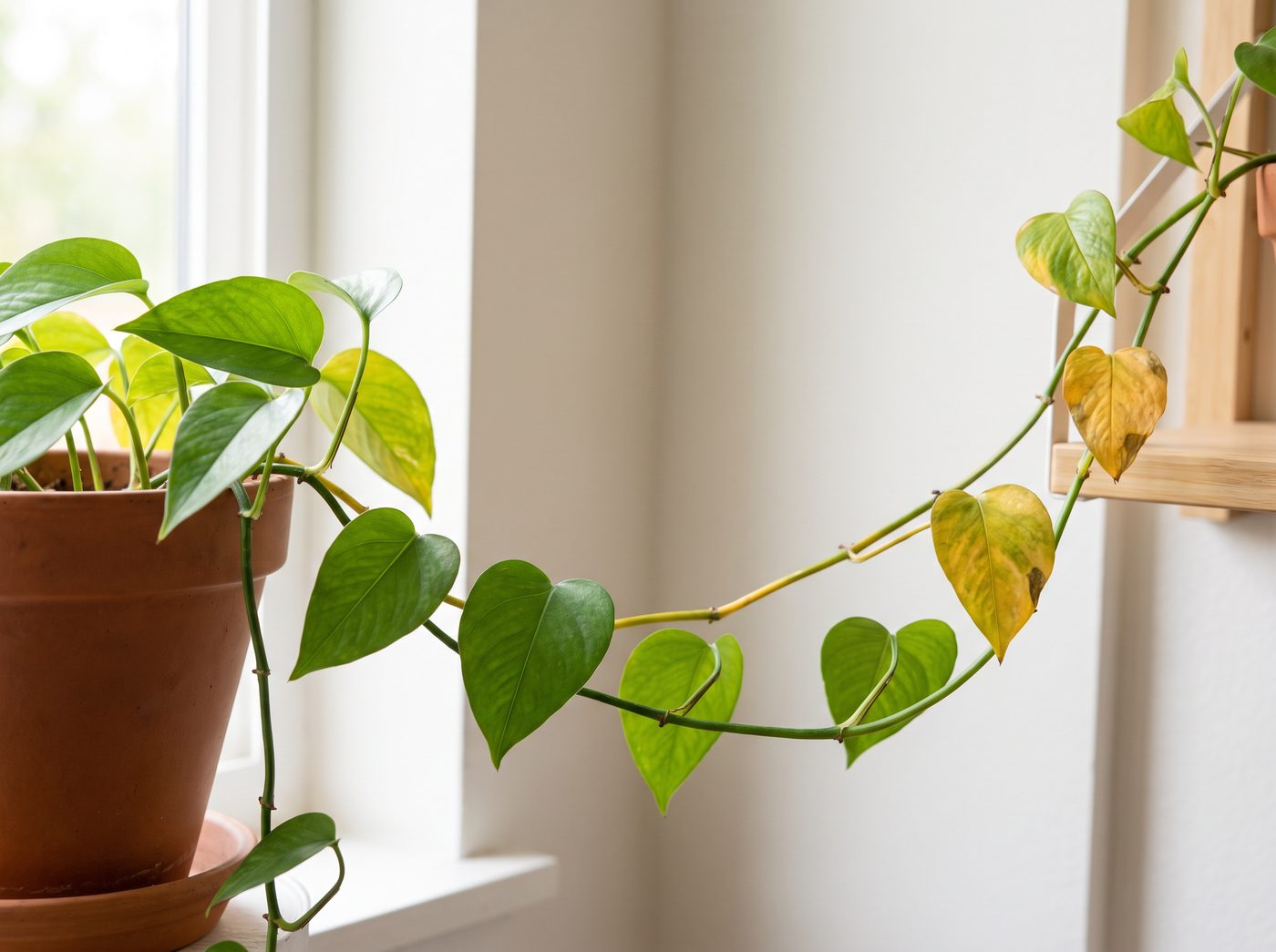
A pothos with a couple of yellow leaves isn't automatically a plant in trouble. Older leaves yellow and drop as part of the plant's normal cycle. But yellowing that shows up suddenly, spreads across several leaves at once, or comes with soft stems usually means something specific is off. There are eight common causes, and each leaves slightly different clues once you know what to check.
| What you see | Check next | Most likely cause |
|---|---|---|
| Yellow + soft, mushy leaves + wet soil | Soil moisture, root zone | Overwatering / root rot |
| Yellow + drooping or crispy + dry soil | Soil moisture well below the surface | Underwatering |
| Small new leaves, long bare stretches between leaves | Distance from a light source | Too little light |
| Bleached or pale patches on the window-facing side | Direct sun exposure | Too much direct sun |
| Even yellowing on older leaves, new growth stays green | How long since repotting or fertilizing | Nutrient deficiency |
| Slower growth, soil dries out unusually fast | Roots circling the pot | Root-bound / degraded potting mix |
| Stippled or mottled yellowing, sticky residue | Leaf undersides | Pests |
| One old, low leaf yellow, rest of the vine thriving | Overall plant vigor | Normal aging |
1. Overwatering
This is the single most common cause of yellow pothos leaves, and it's worth ruling out first even if you don't think you're watering too often. Pothos roots are genuinely sensitive to sitting in soggy soil, and once they start to suffocate or rot, the plant can't move water and nutrients where they're needed.
How to tell: old and new leaves yellow around the same time, stems near the soil line feel soft rather than firm, and the soil has a sour or musty smell instead of a plain earthy one. If you tip the plant out of its pot, healthy roots are white to tan and firm; rotting roots are brown, black, or mushy.
The fix: let the top two inches of soil dry out before watering again. Pothos actually prefers to dry out between waterings, unlike a lot of tropical houseplants it gets lumped in with. Make sure the pot has drainage holes and isn't sitting in a saucer of standing water. If you find soft, blackened roots, trim them away with clean scissors and repot into fresh, well-draining soil. After that, keep the new mix lightly moist rather than either soaking it again or withholding water on a fixed schedule. The goal is letting the cut roots heal, not starving them.
2. Underwatering
Less common than overwatering, but it happens, especially if a pothos gets forgotten on a shelf for a few weeks.
How to tell: yellowing shows up mainly on older leaves, often combined with curling, crisping, or a generally limp look to the whole plant. The soil feels dry well below the surface, and the pot feels noticeably lighter than usual.
The fix: water thoroughly until it runs from the drainage holes, then check the soil with a finger every few days rather than watering on a fixed calendar. Light, temperature, and pot size all change how fast soil dries out, so a rigid schedule tends to drift out of sync with what the plant actually needs.
3. Too little light
Pothos has a reputation as a low-light survivor, and it can hang on in a dim corner for a long time. Surviving isn't the same as thriving, though, and prolonged low light eventually shows up as yellowing along with weak, stretched growth.
How to tell: new leaves come in smaller than the ones before them, stems look stretched or leggy as the plant reaches toward whatever light it can find, and any variegated leaves may lose their pattern and come in a plainer green.
The fix: move the plant closer to a bright window with indirect light. A spot a few feet back from an east- or west-facing window is usually a good match. Increase light gradually rather than moving a shade-adapted plant straight into strong sun.
4. Too much direct sun
The opposite problem gets skipped in a lot of yellow-leaf articles, but it's just as real. A pothos that's spent months adjusting to indirect light can scorch fast in a sunnier spot: a new window, a move outside for summer, or furniture rearranged closer to the glass.
How to tell: yellowing or bleached, papery patches appear specifically on the side of the plant facing the light, rather than spread evenly across the whole vine.
The fix: move the plant back from direct sun or add a sheer curtain to filter it. Bright, indirect light is what pothos actually wants, not a dim corner but not full unfiltered sun either.
5. Nutrient deficiency
Houseplants growing in the same pot of soil for a year or more eventually run short on nutrients, and low nitrogen is a common contributor to yellowing, though it isn't the only nutrient that can run low.
How to tell: yellowing is fairly even across older leaves while new growth at the tips stays green. This pattern is consistent with a nutrient shortfall, though overwatering and normal aging can produce something similar, so it's worth ruling those out first rather than treating this as a standalone diagnosis.
The fix: feed with a balanced, diluted liquid houseplant fertilizer during spring and summer, following the label rate. Reduce or skip fertilizing when growth slows in winter. If you haven't refreshed the soil in a year or two, that's also worth doing, though repotting is better timed to what the plant is actually showing you (see below) than to the calendar alone.
6. Root-bound or degraded potting mix
A pothos that's outgrown its pot, or whose potting mix has broken down and compacted over a couple of years, has a harder time taking up water and nutrients evenly, which can show up as yellowing along with stalled growth.
How to tell: roots are visibly circling the inside of the pot or poking out of the drainage holes, the soil dries out unusually fast after watering, and growth has slowed even though light and watering seem fine.
The fix: repot into a container one size up with fresh, well-draining mix, gently teasing apart circling roots first. Repot based on what the roots and soil are actually telling you, not a fixed every-year-or-two rule.
7. Pests or disease
Sap-sucking pests and, less commonly, root disease can both cause yellowing that's easy to mistake for a watering problem at first glance.
How to tell: check the undersides of the leaves for stippling, fine webbing, small brown bumps, or a sticky residue, all signs of spider mites, scale, or mealybugs. If the yellowing is paired with dark brown or blackened tissue and a persistently soggy pot rather than plain yellow leaves, that combination points more toward root rot or a disease like Phytophthora than a simple pest.
The fix: for pests, isolate the plant, wipe down leaves and stems, and treat with insecticidal soap or neem oil according to the label. For suspected root disease, unpot the plant, trim away any dark, mushy roots, and repot into fresh soil. Severely affected plants sometimes don't recover and are better replaced with a healthy cutting.
8. Natural aging
Sometimes yellowing isn't a problem at all. Pothos vines continually put out new growth at the tips while shedding their oldest leaves near the base, and a leaf or two turning yellow and eventually dropping is part of that normal cycle.
How to tell: only one or two of the very oldest, lowest leaves are affected, the rest of the plant looks healthy, and you can see new leaves unfurling elsewhere on the vine.
The fix: nothing needs fixing here. Leave the leaf until it fully yellows and falls, or snip it off for a tidier look. Either way is fine.
A 5-minute troubleshooting sequence
If you're not sure which of the eight applies, work through these in order instead of changing several things at once. Watering more, fertilizing, repotting, and moving the plant all at the same time makes it impossible to tell what actually helped.
- Check the soil several inches down. Wet: don't water again, and check the roots if yellowing is spreading. Very dry: water thoroughly and watch for recovery over the next few days.
- Look at leaf texture. Soft or wilted with wet soil points to a root problem. Crispy or curled with dry soil points to drought.
- Look at where on the plant it's happening. Small new leaves with long bare stretches: not enough light. Bleached patches on the window side: too much direct sun. Roots visible at the drainage holes: root-bound.
- Ask what changed recently. Repotted, moved windows, started or stopped fertilizing, or a change in season are often more diagnostic than the exact shade of yellow.
- Change one thing at a time unless you've found active rot or pests, which need addressing right away.
The bottom line
Start by checking the soil, since watering problems explain most yellow-leaf cases in pothos. If soil moisture doesn't match what you're seeing, work through light, nutrients, and the pot itself next, and remember that a leaf or two yellowing at the base of an otherwise thriving vine is often nothing to worry about. A fully yellowed, senescing leaf generally won't turn green again, though very mild, early chlorosis can sometimes improve once the underlying cause is corrected. Either way, look for healthy new growth over the following weeks as your real sign the plant has recovered.
Frequently asked questions
Why is my pothos turning yellow and dropping leaves?
Combined yellowing and leaf drop most often points to overwatering and root stress, though it can also happen with underwatering or as part of normal aging if it's isolated to a few of the oldest leaves. Check the soil moisture and root health first.
My soil is dry, so why are the leaves still turning yellow?
Dry soil rules out overwatering, but not everything else. Too much direct sun, a nutrient shortfall, a root-bound pot, or pests can all cause yellowing in a plant that's watered on schedule. Work through the other checks in the diagnosis table above.
Should I cut off yellow pothos leaves?
Yes, once a leaf has fully yellowed it's very unlikely to turn green again, so trimming it off is fine and won't harm the plant.
Is yellowing always a sign of overwatering?
No. Overwatering is the most common cause, but underwatering, too much or too little light, nutrient deficiency, a root-bound pot, and pests all produce yellow leaves too. The pattern of the yellowing, and what else is going on with the plant, helps tell them apart.
Sources
- NC State Extension, Plant Toolbox — Epipremnum aureum
- Penn State Extension — houseplant nutrient deficiency and diagnostic guidance
- Illinois Extension — houseplant repotting and watering guidance
- University of Minnesota Extension — houseplant care and light requirements
This guide combines hands-on experience with the extension sources above; last reviewed August 2026.
Every guide here comes from things I've actually tried on my own plants. Got a plant doing something weird? Send me a photo — I answer every one.
Ask a plant question →